Source Heavy Duty Tennis Court Wire for Outdoor Sports
Compare 18 listings of heavy duty tennis court wire featuring galvanized steel, PVC coating, and hexagonal weaving. Buyers can evaluate tensile strength, installation methods, and customization options for outdoor sports facilities; compare the available evidence and request quotations based on your requirements.
Key considerations
Products List


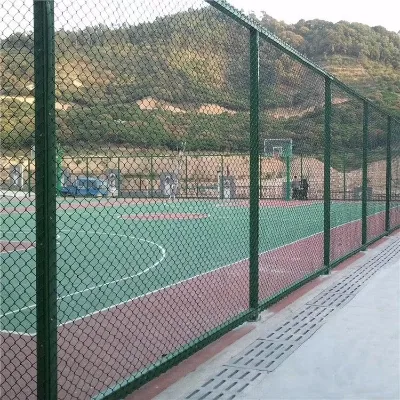
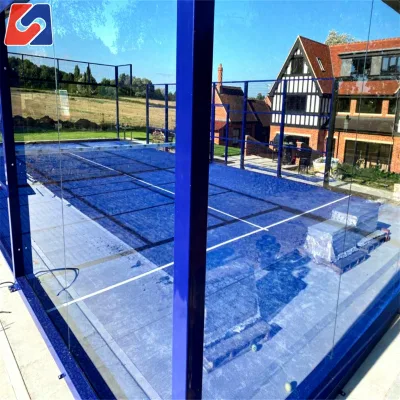


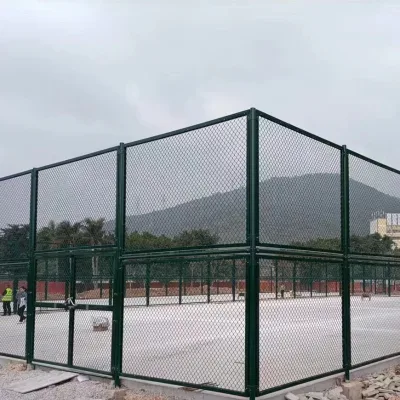
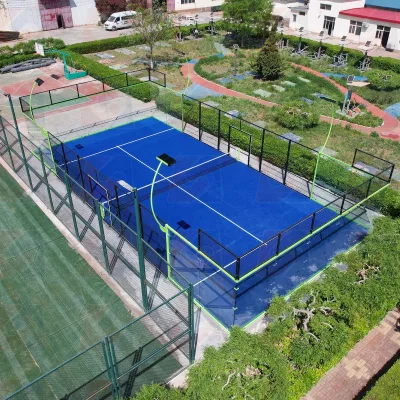
Comprehensive Sourcing Guide
Heavy Duty Tennis Court Wire Sourcing Guide
Procuring heavy-duty tennis court wire requires distinguishing between generic fencing and specialized sports enclosures designed for high-impact ball retention. The observed market data indicates a product range extending from basic galvanized steel wire to complex PVC-coated systems with specific tensile strengths. Buyers must verify that the selected wire mesh meets the rigorous demands of professional play, where durability and consistent tension are critical for maintaining court boundaries and safety.
The available listings reveal a diverse array of configurations, including models explicitly labeled for tennis, soccer, and basketball applications. While some products feature a standard hexagonal weave, others utilize welded techniques with specific frame materials like galvanized steel. Sourcing decisions should prioritize units that explicitly state their suitability for outdoor sports environments, ensuring the wire mesh can withstand repeated ball impacts without deformation or structural failure over time.
Product Scope and Observed Listing Signals
Buyers should scrutinize the specific functional attributes listed in product descriptions to ensure alignment with tennis court requirements. The observed data highlights products with "Waterproof" and "Durable Years" exceeding ten, alongside specific surface treatments like "Galvanized + PVC Coated." These signals indicate a focus on longevity and weather resistance, which are essential for outdoor installations exposed to rain, UV radiation, and temperature fluctuations.
Listing variations also show distinct color options, including green, white, and custom shades, which can impact visibility and aesthetic integration with the court surface. Some entries specify a "Football Cage" model number while others denote "Tennis Court Wire Fence," suggesting that model numbers are not always indicative of the primary sport. Procurement teams must cross-reference the stated usage, such as "Outdoor fitness equipment" or specific sport types, to avoid purchasing enclosures designed for different impact profiles or safety standards.
Technical Specifications to Verify
Verification of tensile strength is the primary technical checkpoint for ensuring the wire can withstand high-velocity ball impacts without stretching or snapping. The observed specifications list tensile strength values of at least 7.0kN and steel wire tensile strength of 1400 MPa, which serve as critical benchmarks for heavy-duty applications. Buyers must confirm that the specific unit they order meets or exceeds these thresholds to guarantee structural integrity during intense matches.
Dimensional consistency is equally vital, with observed data pointing to wire thicknesses around 2.5mm and plastic-coated diameters of 3.8mm. These measurements directly influence the mesh aperture size and the overall rigidity of the fence. Procurement teams should request detailed technical sheets confirming the hole shape, such as the observed hexagonal pattern, and the weave technique, whether satin or welded, to ensure the mesh density prevents ball penetration while maintaining the necessary flexibility for installation.
Compliance and Safety Documentation
Safety compliance for sports fencing often involves verifying that the materials and manufacturing processes meet international environmental and safety standards. The observed listings mention certifications such as CE, RoHS, and ISO, which suggest adherence to specific regulatory frameworks regarding material safety and environmental impact. Buyers should request valid certification documents to confirm that the galvanized and PVC-coated materials do not contain hazardous substances that could degrade over time or pose risks to players.
Documentation regarding the product's origin and manufacturing standards is also necessary to ensure traceability and quality assurance. The data indicates origins in Shandong, China, with specific model numbers like SJW-001 and SJX-EUP. Procurement teams must verify that the supplier can provide proof of these standards and that the "Export Packing" methods are sufficient to prevent damage during transit, ensuring the product arrives in a condition ready for immediate installation without compromising safety features.
Cost Drivers and Commercial Terms
The cost of heavy-duty tennis court wire is heavily influenced by the complexity of the surface treatment and the material composition. Products featuring a dual-layer treatment of galvanization followed by PVC coating generally command higher prices due to the added manufacturing steps and material costs. Buyers should analyze the price range observed, which spans from 1.84 to 9700 USD, understanding that the lower end may represent basic wire components while the higher end likely includes complete frame systems and specialized coatings.
Commercial terms such as Minimum Order Quantity (MOQ) and packaging specifications significantly affect the total landed cost. The observed MOQ ranges from 1 set to 500 units, offering flexibility for small projects but potentially increasing unit costs for bulk orders. Additionally, the "Export Packing" and specific single package sizes, such as 20x20x20 cm, impact shipping logistics and freight charges. Buyers must calculate the total cost of ownership, including freight and handling, rather than focusing solely on the unit price listed in the catalog.
Supplier Qualification and Quality Control
Supplier qualification requires a rigorous assessment of their manufacturing capabilities and quality control processes, particularly for products with complex surface treatments. The observed data highlights suppliers offering "Customization" and specific "Frame Finishing" options, indicating a need to verify their ability to maintain consistency across custom orders. Buyers should request samples to test the adhesion of the PVC coating and the uniformity of the galvanization to ensure the product will not corrode or peel under harsh outdoor conditions.
Quality control protocols must also address the structural integrity of the assembled units, including the "Columns Material" and "Frame Material." Since the data specifies galvanized steel and metal frames, buyers should verify the thickness and grade of these components to prevent bending or failure under wind load or impact. Establishing a clear communication channel for defect reporting and warranty claims is essential, especially given the observed "10 Years Service Life" claims, which require robust after-sales support to be credible.
Long-Term Procurement Checks
Long-term procurement success depends on verifying the actual service life claims against real-world performance data and warranty terms. The observed listings mention a "10 Years Service Life" and "Over Ten Years" durability, which are significant selling points but require validation through independent testing or verified case studies. Buyers should ensure that the warranty covers not just the wire mesh but also the frame and coating, protecting against premature degradation caused by environmental exposure.
Regular audits of the supply chain and periodic re-evaluation of supplier performance are necessary to maintain consistent quality over time. As the market offers various models with different specifications, such as the "SJX-EUP" or "SJW-001," buyers must maintain a dynamic inventory of approved suppliers who can consistently meet the evolving technical requirements of tennis court construction. This proactive approach ensures that future replacements or expansions can be sourced without compromising the safety and performance standards of the facility.
FAQs
What is the tensile strength of the steel wire used in these fences?
The steel wire used in these fences has a tensile strength of at least 1400 MPa. This high-grade material ensures the structure can withstand significant physical stress and impact. The overall tensile strength of the fence system is rated at 7.0 kN or higher, providing robust security for outdoor sports courts.
How durable is the PVC coating on the galvanized steel columns?
The columns are made of galvanized steel with a PVC-coated surface treatment for enhanced durability. This combination offers excellent resistance to corrosion and weathering, ensuring a service life of over ten years. The protective coating helps maintain the structural integrity and appearance of the fence in various outdoor environments.
Can the tennis court wire fence be customized for specific dimensions?
Yes, customization is available for these tennis court wire fences. Buyers can specify unique dimensions and colors, including green, white, or other custom options. The product supports various model numbers and sizes, allowing for tailored solutions that fit specific court requirements while maintaining the standard export packing quality.
What is the minimum order quantity for purchasing this fencing system?
The minimum order quantity for this fencing system is one set. This flexible MOQ allows buyers to purchase small quantities for testing or smaller projects. The product is sold as a single item with export packing, making it accessible for various procurement needs without requiring large initial commitments.
Is the fence suitable for outdoor installation in harsh weather conditions?
Yes, the fence is designed for outdoor use and is waterproof. It features a durable construction with galvanized steel and PVC coating to resist environmental factors. The product is rated for over ten years of service life, ensuring reliable performance in various weather conditions while maintaining its structural stability and aesthetic appeal.
What certifications are associated with this tennis court wire fence product?
The product holds CE, RoHS, and ISO certifications, indicating compliance with international standards. These certifications ensure the fence meets specific safety and environmental requirements. The galvanized and PVC-coated steel construction adheres to these standards, providing buyers with confidence in the product's quality and regulatory compliance for global sourcing.